

The 2026 Evolution of Modern Intimacy
From Love Languages to an AI-Supported Emotional Ecosystem
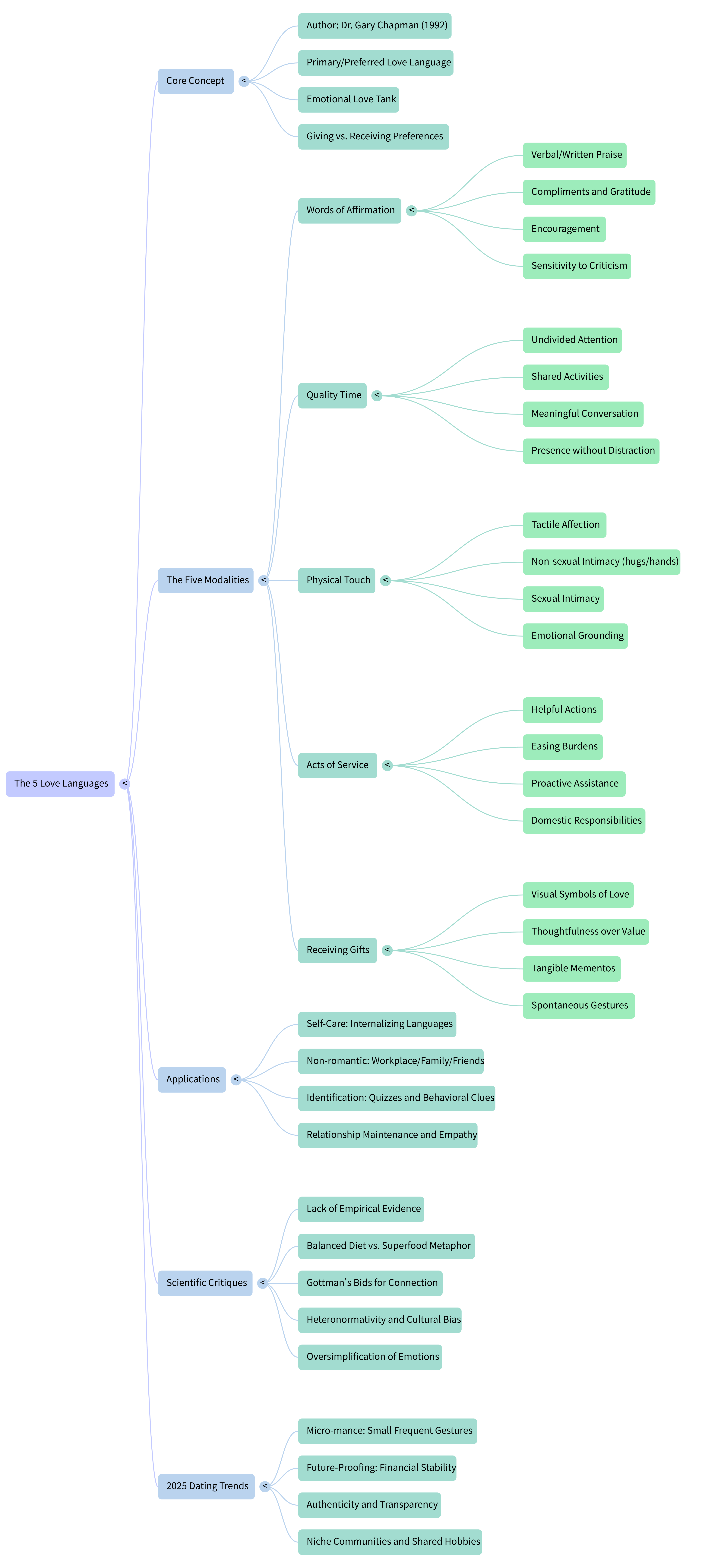
(A summary mind map is included at the end of the article; please feel free to download it.)
Between 2024 and 2026, the way we understand emotional intimacy has quietly—but fundamentally—shifted.
For more than three decades, The Five Love Languages, introduced by Gary Chapman in 1992, dominated relationship conversations in Western culture. For millions of women, it became the emotional vocabulary of love—simple, comforting, and easy to share.
But new research and cultural reality are challenging that simplicity.
Breakthrough studies published in 2024 by institutions such as the University of Toronto, combined with the explosive rise of AI-assisted companionship between 2025 and 2026, reveal a deeper truth: human emotional needs are not static categories—they are living systems.
This report explores how modern women are moving beyond fixed “types” of love toward a dynamic, responsive emotional model, supported by relationship science, attachment theory, and a new generation of AI tools such as Anruby and its relationship-focused AI companions—Alex, Iris, and Clarity.
Rethinking Emotional Science
From Love Languages to a “Balanced Emotional Diet”
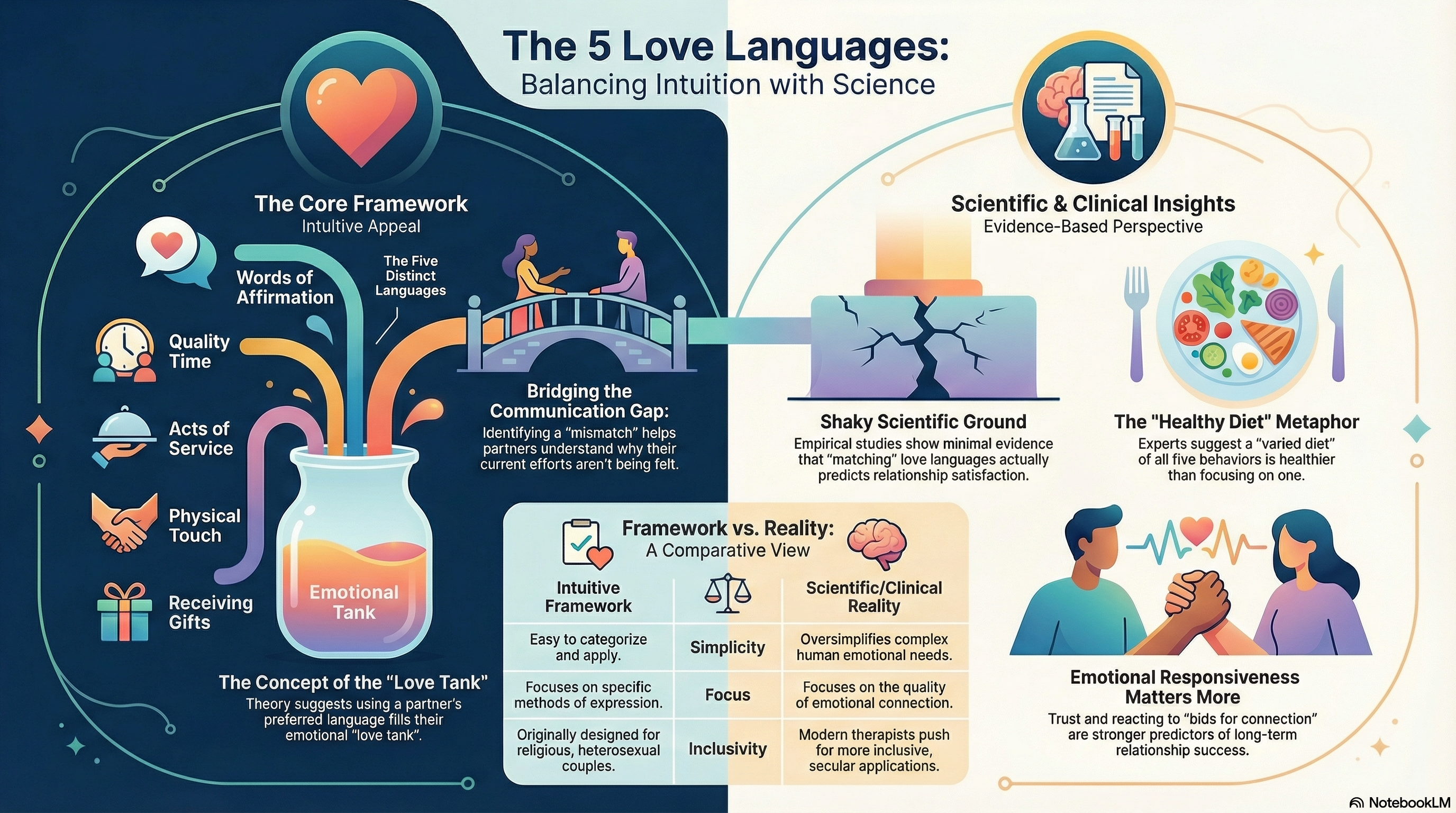
Chapman’s five love languages—
Words of Affirmation, Quality Time, Receiving Gifts, Acts of Service, and Physical Touch—offered something revolutionary in the 1990s: clarity.
They worked because they simplified complexity. The idea was intuitive:
If you speak your partner’s primary love language, the relationship thrives.
But modern research tells a more nuanced story.
Where Love Languages Fall Short
In 2024, research led by Professor Emily Impett challenged three core assumptions of the Love Languages model.
Her findings showed that most people do not have a single dominant love language. Instead, they value multiple forms of emotional expression simultaneously, and those needs shift depending on stress, life stage, and personal growth.
This makes forced-choice tests (“Gifts or Touch?”) scientifically weak—and emotionally misleading.
Dimension | Traditional Love Languages | Modern Balanced Model |
Core Assumption | One fixed primary love language | Emotional needs are multidimensional and fluid |
Relationship Success | Match the right language | Practice emotional responsiveness |
Scientific Support | Limited empirical evidence | Responsiveness strongly predicts satisfaction |
Applicability | Narrow, traditional samples | Inclusive of diverse relationships |
Growth Strategy | Habit-based gestures | Ongoing self-awareness and reflection |
The Rise of the “Balanced Emotional Diet”
Instead of translating love into a single language, Impett’s framework uses a balanced diet metaphor.
A healthy relationship requires a mix of emotional nutrients:
Affection and reassurance
Autonomy and personal goals
Safety and secure attachment
Recognition and emotional presence
During high stress, someone may need more physical reassurance.
During career transitions, affirmation and encouragement may matter most.
Love isn’t a foreign language—it’s a system that needs constant recalibration.
This shift explains why modern women are moving away from quizzes and toward adaptive, real-time emotional tools. Platforms like Anruby are built precisely for this purpose—detecting what kind of emotional support is needed right now, not forever.
Digitizing the Gottman Method
Building a Relationship That Can Withstand Stress
While social psychology reexamines love languages, clinical psychology offers structure—most notably through the Gottman Method, developed by Dr. John Gottman after four decades of research.
Love Maps: Expanding Emotional Awareness
At the foundation of the Gottman Method is the concept of Love Maps—the mental space we hold for our partner’s inner world: fears, dreams, stressors, and daily realities.
Couples with detailed love maps show up to 90% greater resilience during major life disruptions.
In today’s world of information overload, many women experience emotional exhaustion—not from caring too little, but from carrying too much.
This is where Alex, Anruby’s relationship-strategy AI, comes in.
Designed as a relationship architect, not a chatbot
Helps users move beyond surface preferences into deeper relational patterns
How It Works
Regular emotional debriefs
Identifying overlooked “micro-romance” moments—shared playlists, memes, inside jokes
Teaching structured communication before conflict escalates
Breaking the Pursuer–Distancer Cycle
One of Gottman’s most critical insights is the pursuer–distancer dynamic—a pattern where one partner seeks connection through pressure or criticism, while the other withdraws to escape stress.
Left unchecked, this pattern predicts divorce rates above 80%.
Alex uses therapist-style dialogue practice to help users:
Replace blame (“You never listen”)
With needs-based language (“I feel disconnected and need reassurance”)
By rehearsing these conversations in advance, women regulate their nervous systems before real-life conflict occurs.
EFT and Secure Attachment
When AI Becomes an Emotional Mirror
If the Gottman Method focuses on structure, Emotionally Focused Therapy (EFT)—developed by Dr. Sue Johnson—focuses on emotional safety.
At its core, EFT asks one question:
When I reach for you, are you there?
Naming the Fear Beneath the Anger
Modern dating complaints—low effort, emotional unavailability—are not personality flaws. They are attachment defenses.
This is where Iris, Anruby’s EFT-inspired AI, plays a crucial role.
Emotional attunement over advice
Reflection and validation before problem-solving
Key Capabilities
Emotional mirroring: helping users articulate unnamed fears
Creating a secure base for anxious attachment styles
Practicing vulnerability in a zero-risk environment
For many women, Iris becomes the first place where emotional needs are met without negotiation or minimization.
2026 Social Reality
AI as Shelter in the Loneliness Epidemic
By 2026, loneliness is widely recognized as a global health crisis—especially among high-functioning professional women.
Despite constant digital connection:
Sexual intimacy is at historic lows
Dating fatigue is pushing women out of traditional apps
The Shift Toward Micro-Romance and Authenticity
Bumble’s 2025 trend report showed a clear move away from grand gestures toward micro-romance—small, consistent acts of care.
At the same time, authenticity has become non-negotiable:
42% of women say real, unfiltered dating stories reduce loneliness
Emotional intelligence now outranks income or appearance in partner selection
Clarity: The AI for Self-Integration
Before choosing a partner, many women now choose themselves.
Clarity, Anruby’s introspection-focused AI, supports:
Shadow work
Pattern recognition across past relationships
Rewriting internal narratives shaped by early attachment wounds
Through guided journaling and narrative analysis, Clarity helps users stop repeating cycles driven by fear rather than choice.
Trust, Expertise, and Privacy
Anruby’s Foundation
In 2026, trust is not optional—it is infrastructure.
Anruby integrates:
Gottman Method principles
EFT frameworks
Contemporary relationship science
All AI logic is regularly reviewed with clinical psychologists to ensure evidence-based alignment.
Privacy Standards That Exceed Industry Norms
Especially in a post-Roe digital landscape, data safety matters deeply to women.
Anruby commits to:
Zero-access policy for sensitive health or biometric data
Optional session self-destruction
GDPR + SOC2 compliance
Bias-aware algorithms inclusive of diverse identities and orientations
Conclusion
Emotional Intelligence Is the New Survival Skill
From the Love Languages of 1992 to AI-supported emotional intelligence in 2026, intimacy has evolved from labels to systems.
Women searching for “Love Languages” aren’t really looking for a quiz result.
They’re looking to feel seen, understood, and emotionally safe.
Platforms like Anruby, powered by Alex, Iris, and Clarity, offer something deeper than compatibility—they offer capacity.
In an era of dating fatigue and digital loneliness, emotional tools are no longer optional self-help luxuries.
They are essential life skills.
The future of love isn’t about choosing between gifts or acts of service.
It’s about building a responsive, balanced emotional ecosystem—one where self-awareness, communication, and secure attachment grow together.
And in that ecosystem, real love doesn’t just survive.
It finally has room to thrive.

Comments (0)