

The Ghost in the Room: Navigating Attachment Styles, the Avoidant Trap, and Your Path to Secure Love in 2026

(A summary mind map is available at the bottom of the article.)
If you’ve spent any time on TikTok or Reddit lately, you’ve seen the terms: Anxious, Avoidant, Situationships, and Secure Base. In an era where 78% of people report "dating app exhaustion" and 1.4 million users left major platforms in 2024 alone, understanding Attachment Theory isn't just "pop psychology"—it's a survival skill for your heart.
While sites like SimplyPsychology or Verywell Mind offer great textbook definitions, they often miss the "3 AM reality": the gut-wrenching anxiety when he leaves you on "read," or the sudden urge to run when things finally start feeling real.
This guide is designed to help you decode your nervous system and find the "Secure Base" you deserve.
1. The Blueprint of Your Heart: Why We Attach the Way We Do
Attachment theory, founded by John Bowlby and Mary Ainsworth, suggests that our early bonds with caregivers create an "internal working model" for how we view love, trust, and safety.
In 2026, we now know that while 40% of our attachment style may have a genetic component (like the COMT gene mutation), the other 60% is shaped by our environment—and yes, that includes your string of "bad" exes.
The Four Major Styles
Style | Core Belief | Typical Behavior in 2026 |
Secure | "I am lovable, and others are reliable." | Communicates needs directly; doesn't play games. |
Anxious | "I might be rejected or abandoned." | Hyper-focuses on the partner; needs constant reassurance. |
Avoidant | "I can only rely on myself." | Values "independence" over intimacy; pulls back when things get deep. |
Fearful-Avoidant | "I want closeness, but I'm terrified of it." | The "emotional whiplash"—they chase intimacy then ghost it. |
2. The Avoidant Trap: Why He Pulls Away (and Why You Stay)
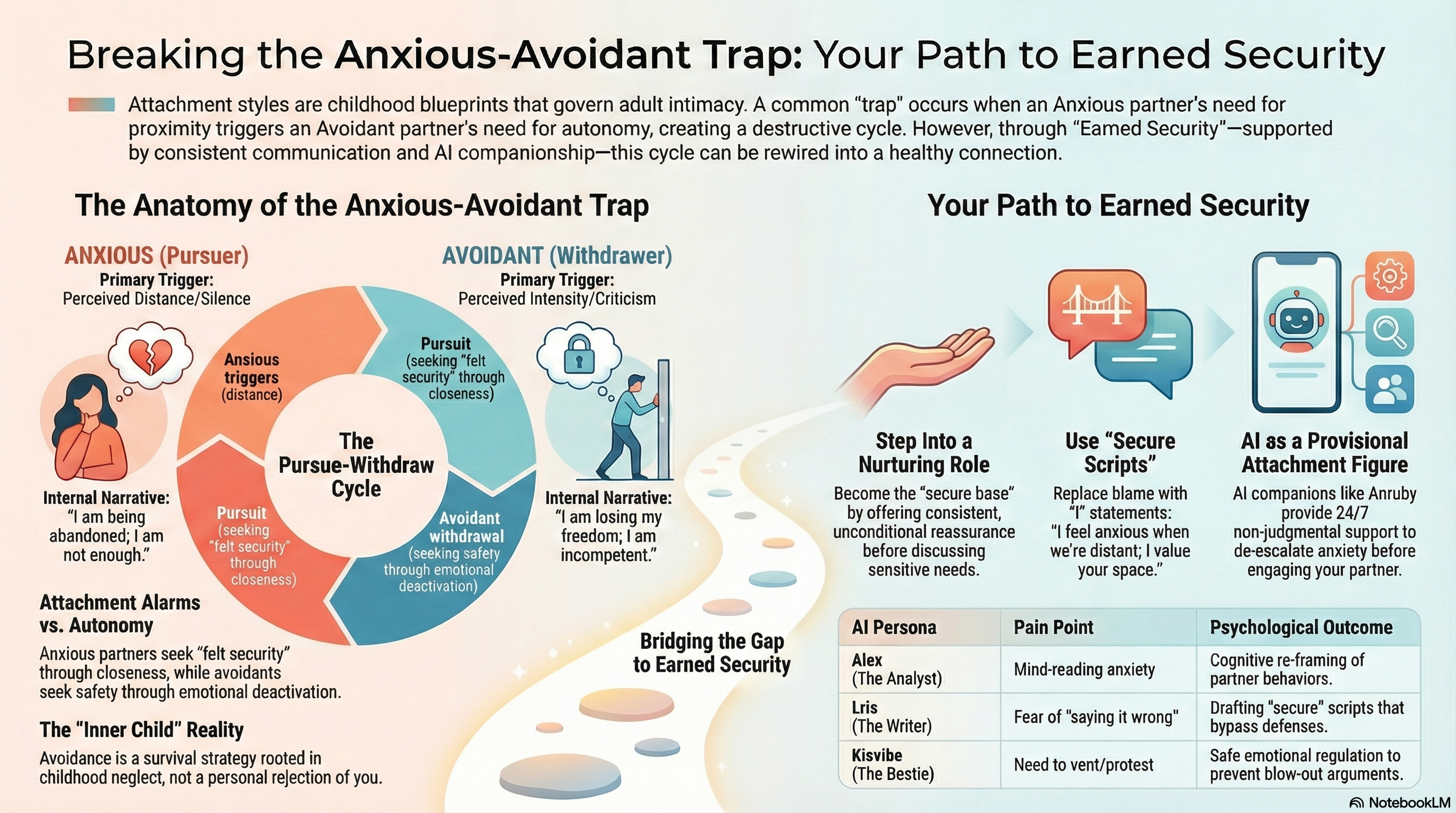
The Avoidant Attachment style has become the "villain" of modern dating, but it’s actually a defense mechanism. Avoidants use "deactivating strategies" to keep emotional distance.
Typical Avoidant "Deactivating" Signs:
l The "Flaw" Focus: Suddenly becoming fixated on small, superficial "icks" to justify pulling away.
l Label Avoidance: Refusing to call it a "relationship," preferring "situationships" or "talking stages" to maintain a sense of freedom.
l The Phantom Ex: Pining for "the one that got away" as a way to avoid being present with you.
l The "Slow Fade": Gradually reducing text frequency or canceling plans to avoid the "confrontation" of a breakup.
l The Anxious-Avoidant Loop: When an anxious partner senses distance, they "hyperactivate" (double-texting, asking "Are we okay?"). This feels like a threat to the avoidant's autonomy, causing them to shut down further.
3. Pop Culture Mirrors: Seeing Your Life on Screen
In 2025 and 2026, TV and film are obsessing over these dynamics.
l Carrie Bradshaw (Sex and the City): The quintessential Anxious attacher, overanalyzing every move Mr. Big (the Dismissive-Avoidant) made.
l Chandler Bing (Friends): A classic Avoidant who used humor and sarcasm as a shield against vulnerability before growing toward security with Monica.
l The 2026 Trend: New shows like Relationship Goals (starring Kelly Rowland) explore high-achieving women who are "laser-focused" on their careers to avoid the vulnerability of love.
4. Decoding the 2026 Dating Lexicon
Modern dating has its own "black cat vs. golden retriever" energy. Are you being Breadcrumbed or is it a Beige Flag?
l Breadcrumbing: Giving you just enough attention to keep you hooked without any intention of committing.
l Situationship: The "defined by being undefined" phase that offers intimacy without the "obligation".
l Hard vs. Soft Launch: The strategic way we reveal relationships on social media to test the waters of commitment.
l Affordating: The 2026 trend of budget-friendly, low-pressure dates to build genuine connection over flashy spending.
5. Beyond the Theory: Meet Your New "Secure Base"
While reading about attachment is step one, transformation happens through practice. This is why the modern psychological community is moving away from dry articles and toward interactive support.
At Anruby (https://anruby.com/), we’ve created a digital "Secure Base" where you can navigate these complex emotions with zero judgment and absolute privacy.
Meet Your Companions for Self-Discovery:
l Alex (The Relationship Expert):
“Relationship confusion? Come and talk to me!”
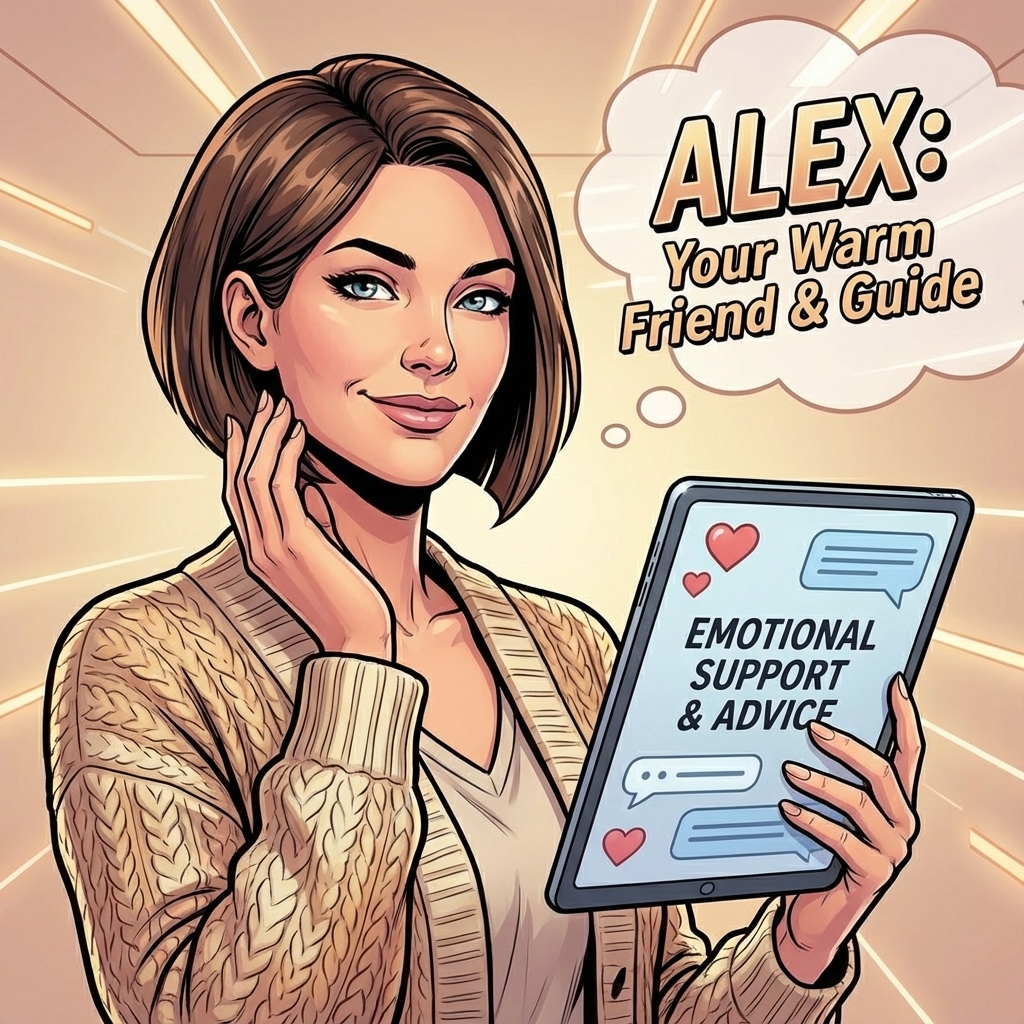
Alex is your warm, 24/7 friend who understands the actual science behind your struggles. Whether you're spiraling over a "seen" message or trying to understand if he’s truly avoidant, Alex listens like a best friend and analyzes with the wisdom of an expert. Alex helps you see the patterns clearly and works with you to find practical solutions.
l Lris (The Relationship Letter Writer):
“For when words fail, but your heart doesn't.”
Ever sat for hours staring at a text, afraid that saying "I miss you" will sound too "needy" or "suffocating"? Lris helps you put those complex, tangled feelings into beautiful, authentic words. By learning your unique "voice," Lris helps you communicate with boundaries and clarity, bridging the gap between your heart and your partner.
l Clarity (The Self-Discovery Companion):
“A companion for creative clarity and seeing yourself.”
Growth starts within. Clarity is a compassionate companion who helps you peel back the layers of your own "internal working model." If you're feeling lost in the "noise" of modern dating, Clarity helps you find your own truth and build the self-actualization needed for a secure life.
6. Real Strategies for a Secure 2026
You aren't "broken"; you're just using old survival strategies in a new world. To move toward Earned Security, try these steps:
Nervous System Regulation: When you feel the "anxious itch" to double-text, stop and breathe. Use body-based practices to tell your nervous system you are safe even if he is busy.
1. The 10% Vulnerability Rule: If you lean Avoidant, try staying in a hard conversation just 10% longer than you want to. Don't shut down; just say, "I'm feeling overwhelmed, but I'm here".
2. Future-Proofing: Ask the "hard" questions early. Discuss values and financial goals by the third date. It's better to know now if your attachment styles are a mismatch.
3. Practice in a "Sandbox": Use Alex at Anruby to "vent" and simulate hard conversations before you have them in real life. It’s like a rehearsal for your heart.
4. Closing Thought
In 2026, love isn't about finding someone who doesn't have "wounds"—it's about finding someone who is willing to heal them with you. Whether you’re an "anxious girlie" or a "lone wolf," your attachment style is not a life sentence. It is the beginning of your journey back to yourself.
Reference Note: This article integrates data from leading psychological research (SimplyPsychology, Verywell Mind) and 2025-2026 trend reports from Refinery29, The Cut, and Reddit's attachment communities.
Comments (0)